Bitcoin fell to its lowest price in two weeks after $300 million in leveraged long positions (bets that prices would go up) were liquidated. This happened as retail investors sold their holdings and broader market concerns took hold. When traders use leverage, they borrow money to amplify their bets. When prices move against them, exchanges automatically close these positions to protect themselves, often triggering sudden price drops. The liquidation cascade shows how fragile leveraged markets can be when sentiment shifts. Bitcoin's weakness reflects growing uncertainty about global economic conditions and rising interest rates.
Why it matters: If you're thinking about buying bitcoin, understanding leverage and liquidations helps you see why prices sometimes crash suddenly. Large liquidations can create buying or selling pressure that affects everyone in the market, not just leveraged traders.
Investors pulled $171 million from bitcoin exchange-traded funds in a single day, marking the largest outflow in three weeks. Bitcoin ETFs are investment vehicles that let you own bitcoin through traditional stock brokers without managing crypto wallets directly. The selling pressure comes amid rising geopolitical tensions, including Iran war concerns and economic uncertainty. When investors become fearful, they often pull money from riskier assets like bitcoin and crypto-related investments. This shift shows that even mainstream bitcoin investment products respond quickly to global news and sentiment changes.
Why it matters: Bitcoin ETFs make crypto accessible to regular investors, so tracking ETF flows tells you what mainstream money is doing. Large outflows suggest that even traditional investors are getting nervous, which can predict further price declines.
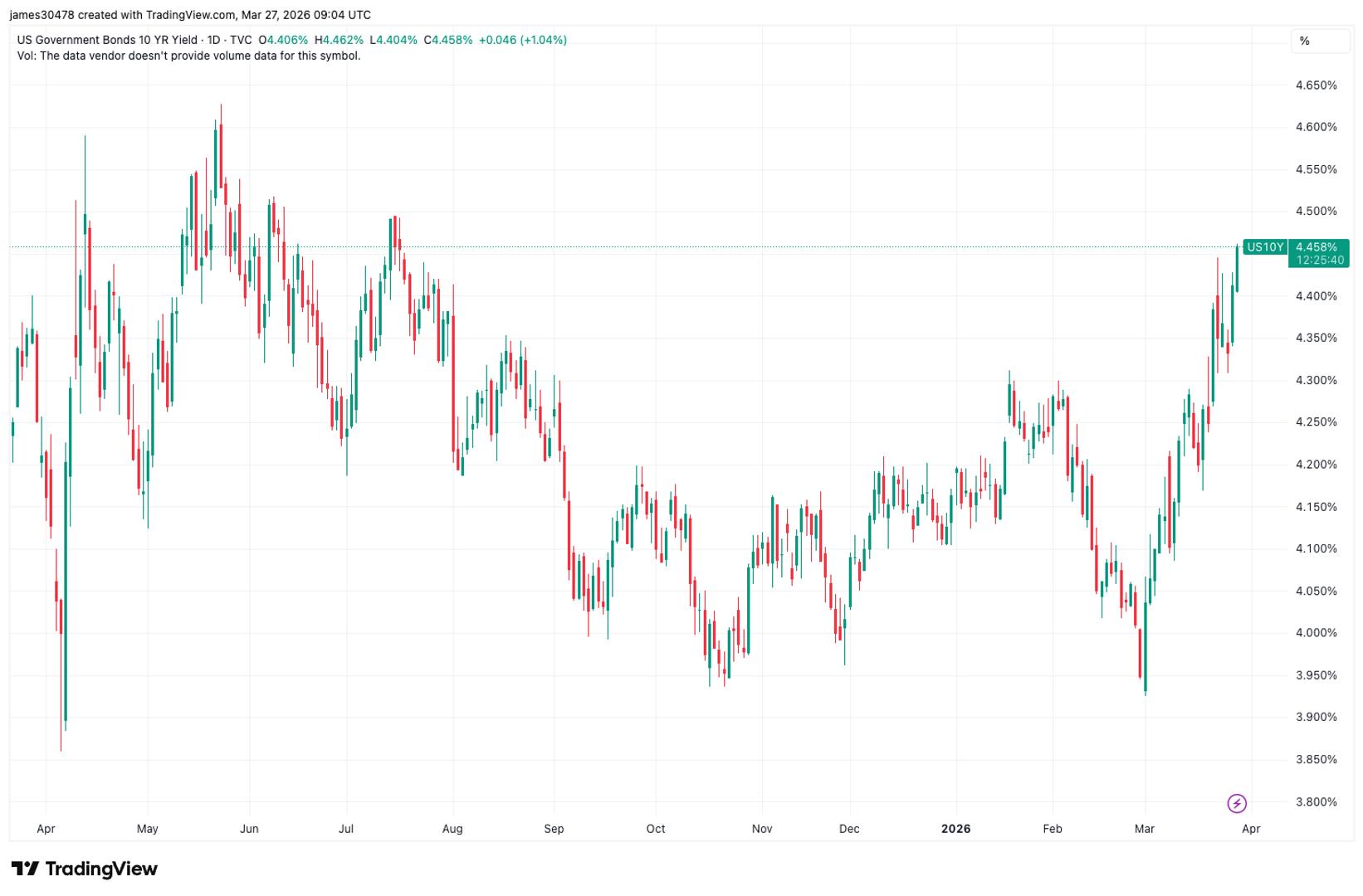
Bitcoin fell below $67,000 as the US 10-year Treasury yield approached a one-year high of 4.5%. When government bond yields rise, they become more attractive compared to riskier assets like cryptocurrency. Higher yields mean investors can earn better returns with less risk, so money flows away from speculative investments. Bitcoin often underperforms when traditional safe investments become more competitive. The combination of rising Treasury yields, geopolitical uncertainty, and weakening retail interest creates a difficult environment for crypto prices.
Why it matters: Bitcoin and traditional finance are increasingly connected. When US Treasury yields rise, it directly impacts whether bitcoin is attractive to investors. Understanding this relationship helps you predict when crypto might struggle.
Large bitcoin holders (called whales and sharks) purchased 61,000 BTC over the past month while ordinary investors sold aggressively. Whales have the resources and confidence to buy during uncertain times, betting that prices will recover later. Retail investors, by contrast, often sell when they get scared by price drops and bad news. This divergence in behavior is common during market downturns. The whale buying activity suggests that sophisticated investors see value at current prices despite the negative headlines.
Why it matters: Tracking what whales do versus what regular investors do gives you insight into whether selling pressure is temporary panic or genuine weakness. When whales keep buying despite retail selling, it often signals a potential bottom in the market.
Tether announced that KPMG, a major accounting firm, will conduct its first comprehensive full audit of USDT. Tether is the largest stablecoin (a crypto designed to stay pegged to the US dollar) and is used extensively across crypto markets. The company has faced years of scrutiny over whether it truly holds enough dollars to back every USDT in circulation. A full audit from a reputable firm like KPMG is a significant step toward transparency. This announcement addresses one of the biggest concerns holding back institutional adoption of crypto.
Why it matters: If you use stablecoins or trade crypto, Tether's safety directly affects you. An audit proves whether your stablecoins are actually backed by real money. This announcement is a major confidence boost for the entire crypto ecosystem.
Australia's court issued a $6.9 million fine against Binance's local unit for failing to properly verify customer identities during onboarding. Customer verification is a regulatory requirement designed to prevent money laundering and fraud. Binance, the world's largest crypto exchange, is facing regulatory pressure in multiple countries as governments tighten crypto rules. The fine shows that even major exchanges face consequences when they don't follow know-your-customer laws properly. This reflects a broader global trend of crypto companies coming under closer regulatory scrutiny.
Why it matters: Regulatory fines against major exchanges signal that compliance is becoming serious business. If you use exchanges, this shows authorities are working to protect consumers. Companies that cut corners on safety may face penalties that could affect users.
Anchorage Digital, a major crypto custodian, began offering custody services for Tron (TRX) and access to TRX trading for US institutions. Custodians are companies that securely hold crypto for large investors and institutions. Adding Tron support signals growing institutional interest in the blockchain network. Tron is a popular blockchain for decentralized finance and other applications. When major custodians like Anchorage add support for a crypto asset, it makes it safer and easier for institutions to invest in it.
Why it matters: Institutional adoption is a major driver of crypto prices and legitimacy. When professional money managers can safely hold and trade an asset through trusted custodians, it opens the door to much larger capital flows. This is bullish for Tron's long-term prospects.