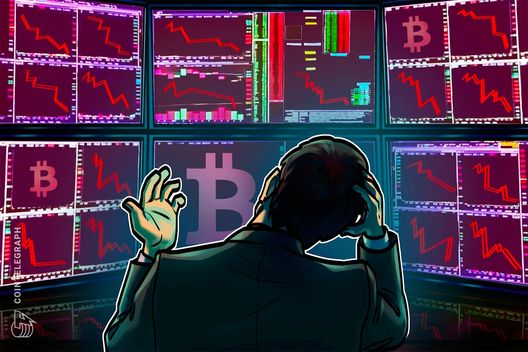
Professional Bitcoin traders currently assess a 53% probability that Bitcoin will fall below $66,000 by April 24, 2026. This reflects growing concerns about potential price weakness in the near term. The probability indicates significant uncertainty among market participants about Bitcoin's direction. Traders are pricing in the possibility of a substantial pullback from current levels. This kind of bearish positioning can influence how investors approach their Bitcoin holdings. The data suggests markets are preparing for downside volatility rather than expecting immediate gains.
Why it matters: If you're thinking about buying Bitcoin, this shows professional traders expect it might get cheaper soon. Understanding trader sentiment helps you time your entry point better and avoid buying at the top of a rally.
Spot Bitcoin ETFs broke a four-week streak of investor inflows, with capital now flowing out of these investment products. Investors are retreating from Bitcoin ETFs because they want to avoid directional risk, meaning they're uncertain about which way the price will go. This marks a shift in investor behavior after a period of strong inflows. ETFs are mainstream investment vehicles that let people buy Bitcoin exposure through traditional brokerage accounts. The outflows suggest institutional and retail investors are becoming more cautious. This could indicate growing skepticism about near-term Bitcoin price movements among professional investors.
Why it matters: When money flows out of Bitcoin ETFs, it shows big investors are getting nervous. This can precede price declines, so it's a signal that many people in the market are hedging their bets rather than going all-in on Bitcoin.
Morgan Stanley has filed for a Bitcoin ETF with a fee of just 0.14%, which would be the lowest in the current market if approved. ETF fees matter because they're charged annually and eat into your returns over time. A lower fee means you keep more of your gains. Morgan Stanley's entry into the Bitcoin ETF space increases competition among large financial institutions. This competitive pressure is driving fees down, which benefits investors who want Bitcoin exposure. The move signals that major Wall Street banks are increasingly comfortable offering Bitcoin products to their clients.
Why it matters: Lower fees mean you lose less money to costs when investing in Bitcoin through an ETF. Morgan Stanley's move shows big banks are competing to offer Bitcoin products, which makes these investments cheaper and more accessible for everyday investors.
Bitcoin miners are pivoting their operations to become AI companies and selling their Bitcoin holdings to finance this transition. Miners typically earn Bitcoin by solving complex math problems, but now many see AI as a more profitable use of their computing resources. They are liquidating Bitcoin inventory to fund this shift toward AI infrastructure. This trend reflects the changing economics of cryptocurrency mining as Bitcoin becomes less lucrative. When miners sell Bitcoin, it can put downward pressure on prices. This development shows that even companies directly involved in Bitcoin production are seeing better opportunities elsewhere.
Why it matters: Miners selling Bitcoin is bearish because it increases supply on the market. If the people making Bitcoin think AI is more valuable than Bitcoin mining, that signals the mining industry itself is losing confidence in Bitcoin's future profitability.
Senator Elizabeth Warren is investigating Bitmain, a China-based company that designs Bitcoin mining chips, over U.S. security concerns. Bitmain's mining equipment is critical infrastructure for Bitcoin's network worldwide. Government officials worry that Chinese companies could represent national security risks or face pressure from their home government. The investigation reflects broader U.S. concerns about reliance on foreign technology for critical infrastructure. This regulatory scrutiny could impact how Bitcoin mining equipment is sourced and used in America. The probe signals that regulators are increasingly focused on the geopolitical dimensions of cryptocurrency infrastructure.
Why it matters: If Bitmain equipment gets restricted in the U.S., it could change how Bitcoin mining works domestically. This shows governments are paying attention to who controls critical crypto infrastructure, which could lead to new rules about equipment suppliers.
California's governor signed an executive order prohibiting government officials from trading on prediction markets based on their insider knowledge. Prediction markets let people bet on future events like election outcomes or economic data. The order addresses concerns that government employees could unfairly profit using non-public information they access through their jobs. This represents one of the first major state-level regulations specifically targeting prediction market abuse. The prohibition helps level the playing field for regular participants who don't have access to government secrets. The move reflects growing recognition of prediction markets as legitimate platforms that require safeguards against unfair advantages.
Why it matters: Prediction markets are becoming more mainstream, and this rule makes them fairer for everyone participating. If regulators start protecting prediction markets from insider trading, it suggests they view these platforms as legitimate and worth regulating properly.
Ripple is deploying artificial intelligence to stress-test the XRP Ledger as more institutional businesses adopt the platform for payments. Stress-testing means pushing a system to its limits to find problems before they cause real failures. Ripple's use of AI allows them to simulate heavy transaction loads and identify vulnerabilities quickly. The company is scaling up because institutional clients are increasingly interested in using the XRP Ledger for real business payments. This development shows Ripple is serious about making its technology reliable for enterprise customers. When companies use AI to improve blockchain infrastructure, it signals the technology is maturing beyond speculation.
Why it matters: Ripple improving its technology for actual business use makes XRP more valuable as a practical tool rather than just a speculative asset. If big companies start using XRP for real payments, that creates genuine demand for the technology.