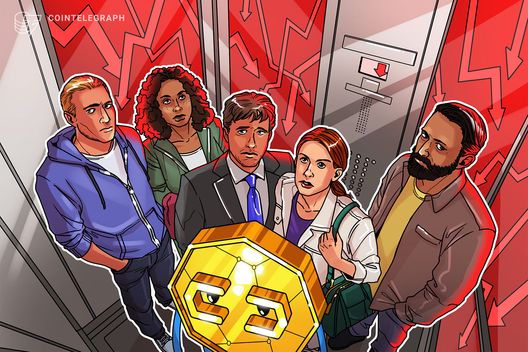
Bitcoin faced significant headwinds this week as professional traders positioned for a drop to $66,000, with 53% probability assigned to a fall below that level by late April. Spot Bitcoin ETFs broke a four-week streak of inflows, with investors pulling capital as uncertainty about price direction increased. The selling pressure was compounded by $300 million in leveraged long positions being liquidated, pushing Bitcoin to two-week lows and creating cascade effects. ETF outflows hit three-week highs of $171 million in a single day as geopolitical tensions and rising US Treasury yields made riskier assets less attractive. Major factors included the US 10-year Treasury yield approaching 4.5% and broader concerns about global economic stability. Despite the weakness, large Bitcoin holders (whales) purchased 61,000 BTC over the month while retail investors panicked, suggesting sophisticated investors saw value at lower prices.
Why it matters: Bitcoin's price volatility directly affects the entire crypto market and impacts your returns if you hold Bitcoin or crypto investments. Understanding that professional traders are betting on further declines helps explain why prices may continue declining, making it important to be cautious with leverage or margin trading.
Morgan Stanley filed for a Bitcoin ETF with a record-low 0.14% fee, intensifying competition among Wall Street institutions to offer crypto exposure with minimal costs. The move reflects increasing comfort among major financial institutions with Bitcoin products and signals that fee competition will benefit investors. Morgan Stanley's entry follows BlackRock and other firms launching crypto ETFs with millions in first-day volumes. Beyond ETFs, Coinbase partnered with Fannie Mae to enable crypto-backed mortgages for homebuyers, allowing people to use Bitcoin as collateral for loans without selling their holdings. This represents a major integration of crypto into traditional financial services and lending systems. The combination of lower fees, easier access, and new financial products shows crypto is becoming normalized as part of mainstream finance.
Why it matters: Lower ETF fees mean more of your investment returns stay with you instead of going to fees. Crypto-backed mortgages give crypto holders more flexibility with their assets, though they also introduce new risks if crypto prices fall sharply.
Bitcoin miners are pivoting their operations toward artificial intelligence businesses and liquidating Bitcoin holdings to fund the transition. Miners see AI infrastructure as more profitable than Bitcoin mining given current economic conditions. This shift is causing miners to sell Bitcoin directly into the market, adding downward pressure on prices. Research showed that approximately 20% of Bitcoin miners worldwide are currently operating at a loss, unable to cover operating expenses. The profitability squeeze is consolidating the industry toward larger, more efficient operations while smaller miners shut down. When miners exit the business, Bitcoin's network computing power decreases, which can affect transaction speed and security.
Why it matters: When major producers of Bitcoin sell their holdings, it pushes prices down. Declining miner profitability suggests Bitcoin mining may no longer be economically viable for many participants, which could reshape the network over time.
US Senator Elizabeth Warren launched an investigation into Bitmain, a China-based Bitcoin mining chip manufacturer, citing national security concerns about reliance on foreign technology. The investigation reflects growing government focus on the geopolitical dimensions of cryptocurrency infrastructure and supply chains. California and the UK both implemented restrictions on cryptocurrency donations to political campaigns, addressing concerns that crypto's pseudonymous nature could hide foreign interference or money laundering in elections. Australia's courts fined Binance $6.9 million for failing to properly verify customer identities during onboarding, showing that major exchanges face consequences for regulatory non-compliance. Brazil approved legislation allowing seized cryptocurrency to fund public security programs, demonstrating governments are finding practical uses for confiscated digital assets. These regulatory moves signal that governments worldwide are tightening oversight across mining, payments, political finance, and customer verification.
Why it matters: Mining equipment restrictions could affect Bitcoin's decentralization if the US limits access to chips made by foreign companies. Political donation bans show governments view crypto as important enough to regulate like traditional money, which is a sign of maturation but also increased oversight.
Tether announced that KPMG, a major accounting firm, will conduct its first comprehensive full audit of USDT, addressing years of concerns about whether the company truly holds enough dollars to back every token in circulation. This is a significant step toward transparency and institutional confidence in the largest stablecoin. The audit announcement comes as the ECB stated that stablecoins and tokenized bank deposits cannot scale globally without direct access to central bank money. The ECB's position suggests stablecoins may need fundamental restructuring to gain broader acceptance in regulated financial systems. Circle's USDC stablecoin surpassed Tether's USDT as the most-used stablecoin by year-to-date trading volume, marking a shift in market dominance. These developments show that while stablecoins are becoming more integrated into finance, regulatory requirements are increasing transparency demands and potentially reshaping how they operate.
Why it matters: Stablecoins are critical for crypto trading and moving money between exchanges. If you use stablecoins, you need to know they're actually backed by dollars or other assets, making audits and regulation important for protecting your money.
Franklin Templeton, a $1.7 trillion investment firm, partnered with Ondo to enable 24/7 stock trading on blockchain, eliminating traditional market hour restrictions. This represents a significant step toward integrating traditional financial markets with blockchain infrastructure. Invesco, managing $2.4 trillion in assets, took control of Superstate's $900 million onchain fund, accelerating the broader tokenization trend. Monument Bank announced plans to tokenize 250 million pounds of customer retail deposits in the UK, marking the first major tokenization of customer bank deposits. Bitpanda launched Vision Chain, a tokenization platform designed specifically for banks to convert real-world assets into digital tokens. Nasdaq partnered with Talos to solve collateral bottleneck problems in institutional tokenization. The World Gold Council released a framework for tokenized gold, allowing the precious metal to be represented as digital tokens while maintaining real-world backing.
Why it matters: Tokenizing real assets like stocks and gold on blockchain makes them easier to trade 24/7 and potentially reduces costs. This trend shows traditional finance is increasingly using blockchain technology for core operations, not just crypto trading.
Ripple deployed artificial intelligence to stress-test the XRP Ledger as more institutional businesses adopt the platform for payments. Stress-testing helps identify vulnerabilities before they cause real failures in production systems. Aave's community voted overwhelmingly to deploy version 4 to its main network, representing a significant upgrade to the major decentralized lending protocol. OpNet launched smart contracts directly on Bitcoin's mainnet, solving a major limitation that made Bitcoin less useful for DeFi compared to Ethereum. Ethereum implemented faster bridge transfers that reduce cross-chain transaction times from hours to just 13 seconds. However, Venus DeFi protocol suffered an exploit resulting in bad debt and a 9% drop in its XVS token, highlighting ongoing security vulnerabilities in DeFi platforms. The incident shows that while DeFi is advancing technologically, security risks remain and can cause sudden losses.
Why it matters: DeFi platforms let you earn yields and trade without traditional intermediaries, but the technology is still evolving and security exploits can cause you to lose money. Faster bridges and smart contracts on Bitcoin expand what's possible in crypto finance, but require careful risk management.
Scammers successfully stole $3.4 million from victims using basic social engineering tactics, specifically text messages impersonating contacts and directing people to malicious links. The simplicity of the attack shows that human psychology remains the biggest vulnerability in crypto security. MediaTek patched a critical smartphone processor bug that could allow hackers to steal cryptocurrency seed phrases in just 45 seconds, exposing how hardware vulnerabilities can compromise digital asset security. Bitrefill warned customers of a data breach tied to North Korean hackers who accessed 18,500 user purchase records, highlighting how state-sponsored groups actively target crypto platforms. Crypto ATM fraud surged 33% with AI-powered scams being the primary driver of the increase. Galaxy Digital research revealed that quantum computers pose a real security threat to cryptocurrency wallets, though the immediate risk is lower than previously feared. The Ethereum Foundation unveiled a quantum-resistant cryptography roadmap to prepare for future threats.
Why it matters: Most crypto hacks come from human error and social engineering, not technological failures. Protecting your seed phrase and not clicking suspicious links is more important than any technical safeguard. Long-term, quantum computing will require blockchain upgrades to remain secure.
The Siren token surged 340% in a week before crashing 70% after analysts revealed that a small number of wallets controlled a dangerously large portion of the token supply. This pattern is classic of pump-and-dump schemes where insiders drive up prices knowing they can dump holdings for profit at the expense of retail investors. Concentrated holdings mean that a few large holders have outsized power to move markets and can theoretically crash prices by selling at any time. The ability to detect these problems through blockchain transparency provides some protection, but many investors ignore these warnings and buy during the hype anyway. The incident serves as a warning that high volatility paired with concentrated token supply often indicates schemes designed to harm unsuspecting investors. Altcoins including memecoins are increasingly outperforming Bitcoin and Ethereum as investors adopt barbell strategies combining safe and extremely risky assets.
Why it matters: Token concentration is a major red flag that should prevent you from investing. Always check how tokens are distributed before buying, and avoid tokens where a small number of wallets hold most of the supply, as this increases the risk of price collapse.
Bitcoin network research revealed a paradox showing that Bitcoin could theoretically survive losing 72% of submarine cables carrying internet traffic but could be crippled by a coordinated attack on just five major hosting providers. This highlights that Bitcoin's theoretical resilience masks real-world vulnerabilities in practical dependencies. AI data center development is consuming massive electricity, creating competition with Bitcoin miners for limited power resources in many regions. The Ethereum Foundation unveiled a quantum-resistant cryptography roadmap to protect the network from future quantum computer threats. Galaxy Digital research showed quantum computing poses a real security threat to cryptocurrency wallets, but the timeline for when quantum computers could meaningfully threaten current systems remains uncertain. These technical challenges are not immediate threats but require long-term planning and upgrades to ensure cryptocurrency networks remain secure.
Why it matters: Bitcoin's security depends on practical infrastructure you probably don't think about, like internet cables and hosting providers. Understanding these dependencies helps explain why concentrating power in a few locations could be risky for the entire network.